
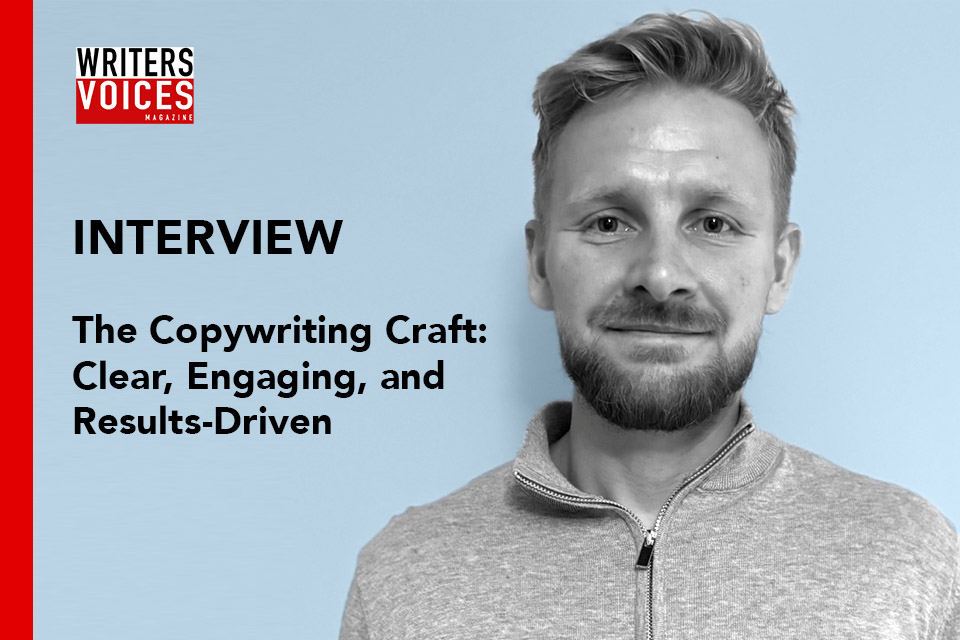
Jack Prouse is a London-based copywriter with nearly a decade of experience creating content that engages audiences and drives results. As Senior Copywriting Manager at Screaming Frog, he leads the agency’s copywriting department, working on everything from commercial sales copy to UX content. Over the years, Jack has collaborated with both well-known brands and growing businesses, helping each find and refine their voice while delivering copy that makes an impact.
Hi Jack, could you introduce yourself?
My name is Jack Prouse and I’m a professional copywriter from London.
I have a bachelor’s degree in English Language from the University of Reading and almost a decade of experience in professional copywriting.
I’m currently the Senior Copywriting Manager at Screaming Frog, a search marketing agency based in Henley-on-Thames, UK.
My role sees me head up our copywriting department and service line, primarily focused on creating onsite content for client websites.
What inspired you to become a copywriter?
I’ve always loved writing and the effect it has on people. Escapism, storytelling, or simply explaining something complicated in simple language to help someone solve a problem.
But I always thought writers could only be two things – book authors or scriptwriters.
It oddly never occurred to me that almost everything you interact with day to day has been written by a copywriter with an aim. To encourage you to take an action or to imagine yourself using a product.
In my post-graduation job search, I started looking for roles that could use my English degree and writing skills. I eventually came across a Junior Copywriter role (at a previous digital marketing agency) and never looked back.
I’ve since spent the best part of a decade learning everything I can about writing effective and engaging copy, and putting it into practice on over a hundred client websites.
Who is your ideal client?
It’s great working with household name brands. I’ve worked with the likes of Tesco Direct, Megabus, Nuffield Health, Zurich and GoCompare over the years (although I’m not sure how many of those names translate to an international audience!). They often have established voices and plenty of content to use as inspiration, which can make your life so much easier as a copywriter.
But I often get the greatest satisfaction from working with smaller or new brands, or those just starting their content journey.
I love the creative process of helping a small business develop its tone of voice, and the big wins that come with building out website content from scratch. This is often where you feel like you’re adding the most value as a copywriter, seeing clients go from having little traffic to appearing at the top of search engine results.
It’s always a guilty pleasure working with brands that can teach you something about your own life, too. Like finance companies. Learning how to manage my money while also creating valuable branded content and getting paid for it? Sign me up!
What kinds of projects do you enjoy most?
I’ll always enjoy getting stuck into an explainer blog post – finding the best way to explain something that so many have tried before.
But I think my favourite projects involve commercial or UX copy.
Sales copy feels like you’re really making a difference to a business’s bottom line. And I often find this is when you can be the most creative with your writing – using vivid imagery to make the user imagine they’re holding the product in their hands. It’s important to replace the experience that people used to have in physical stores and so often miss when online shopping.
UX copy is something I’m still exploring and practicing. It’s so important for websites but, more importantly, for users.
We’ve all been left frustrated before, unable to find what we’re looking for on a website or struggling to find where to go next. UX copy acts as a helping hand, appearing where users need it most, to guide them around the website. It can also be used to tell people what will happen if they click something, or what’s gone wrong if a page fails to load.
I also find UX copy allows you to write in a more personal style, too, which is always my favourite way to write.
How do you approach copywriting, and what can clients expect when working with you?
The first thing for me is to nail the tone of voice.
Whatever you’re writing, it’s likely that someone – or hundreds of people – before you have already written about it. So, what’s going to make yours feel like it’s been written by your brand?
I think all writers could name some of their favourite brand voices and recognise them as soon as they read them. As a writer, I think being able to adapt to these distinct tones and even help your clients grow and develop their voice is what separates you from other writers.
I find the best way to do this is with a kick-off brand workshop with the client – picking their brains about how they write and who they write for. It helps to visualise the target audience and practice speaking to them.
After that, I think it’s the classic process of research and refinement. Use desktop research to learn the topic inside out. Then it’s up to you as the writer to communicate the idea as clearly and accessibly as possible.
I’ll try to communicate every idea in as few words as I can, and in a way that doesn’t make the reader work for the information. Your writing should make the concept come naturally to the audience. And ideally, it makes them take the next step in their journey.
Like so many other professional writers, I definitely also struggle with creative block. It’s not easy to hit your rhythm every day. But one thing I practice, and always tell others, is to just get something down on paper. It’s much easier to then go back to edit and polish it. And your first draft is often much better than you think.
What are some common misconceptions people have about copywriting?
Something I heard a lot early in my career – and that’s grown to become my reality – is that “everyone thinks they’re a writer”.
It’s very common for marketers, stakeholders, and just about anyone who’s not a specialist copywriter to insist on brainstorming a tagline or writing a blog post.
I always find this confusing. You wouldn’t find it in other lines of work.
As a copywriter, I wouldn’t pitch in with the accounting or HR requirements at my agency. Or try my hand at fixing the plumbing in our office when it breaks. Yet everyone seems to think they can write professional copy.
I’ve learned it helps to be collaborative when this happens. Often, people just care about the work and want to be involved.
For example, if a topic expert or stakeholder wants to have their say, try interviewing them. You own the writing, but they get to add their voice and perspective to the piece. This is often great for adding experience, expertise, authoritativeness and trustworthiness, too – always a bonus.
And when our agency works with clients that insist on writing their own copy, I often ask if we can support with something small. Something that doesn’t eat into the budget too much.
We often find that when we’re able to show our value as professional writers, we’re trusted with more projects going forward. You just need a chance to show what you can do.
Besides copywriting, do you provide additional services to your clients?
As I mentioned earlier, I’m currently managing the copywriting team and service line for Screaming Frog. I originally joined the agency as a PR Copywriter in 2018, but eventually spearheaded the creation of a dedicated onsite copywriting team.
The copywriting team has grown rapidly over the years, and we’re now busy working on award-winning campaigns with a focus on getting our clients to the top of the search engines – and keeping them there.
Our team offers writing, proofreading and editing, optimising and even an exciting newly-launched, full-website Copy Audit. This was something I personally developed in response to the growth of AI and its impact on copywriting.
The Copy Audit allows us to go deeper than just writing informational content, which is obviously still so important for both search engine results and establishing brands as thought leaders (although, unfortunately, so many are now turning to AI for help with this content).
The Audit framework includes analysis and recommendations around UX copy, keyword targeting, thin content, spelling and grammar and more.
As a wider agency, we’re SEO specialists who also offer digital PR and paid media services.
How can our readers connect with you?
Visit me at: